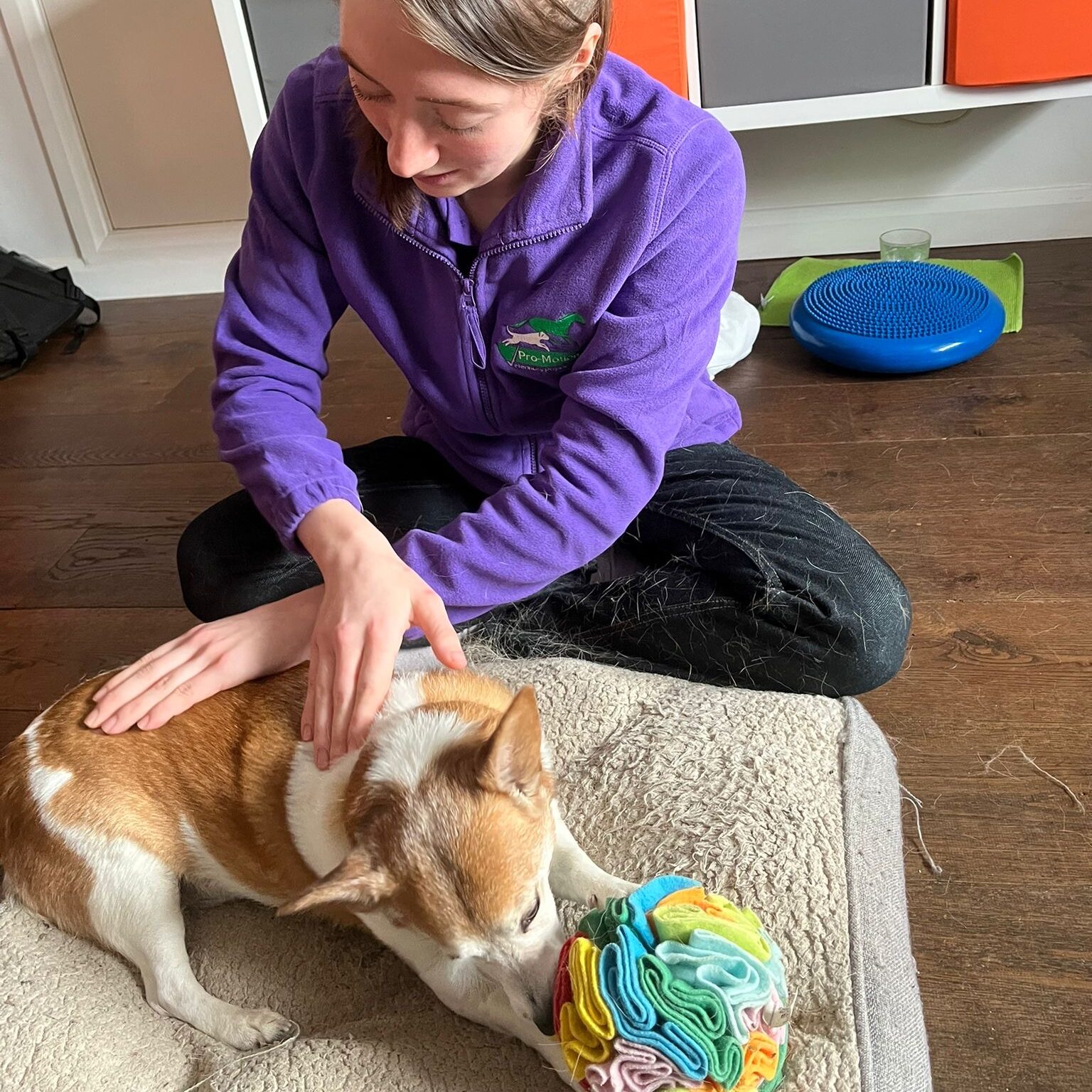
Physiotherapy for dogs is highly important after surgery. Whether your dog is recovering from cranial cruciate ligament surgery (eg. TPLO), fracture repair, joint surgery, or another orthopaedic procedure, canine physiotherapy treatment can accelerate their progress during the recovery period.
For many dog owners, the post-surgical recovery stage can feel overwhelming. With medications to remember, restricted exercise, follow-up vet appointments, and the uncertainty on whether your dog will return to their old self, caring for your dog after surgery can feel like a full-time job.
During the recovery phase, there is one phrase I hear surprisingly often:
“Everything heals eventually”
And yes, you are somewhat correct. Your dog’s surgical wounds will heal, and their damaged tissues will repair overtime.
BUT healing and recovery are NOT the same thing. For example, weeks of restricted exercise will cause your dog’s muscle strength to decline. Scar tissue can reduce joint range of motion in dogs. Balance, coordination, and comfortability may also be affected. Your dog’s bone may heal perfectly on an X-ray, but their overall strength and mobility will need a rehabilitation plan for your dog to recover fully.
Post-operative veterinary physiotherapy for dogs has proven to…
Increase recovery rate in dogs who received surgery for IVDD
A 2019 study used a rehabilitation plan consisting of a mixture of electrotherapies, remedial exercise, manual therapy, and underwater treadmill to treat dogs with IVDD after ventral slot decompression surgery. 79% of the dogs that received physiotherapy treatment showed successful neurological outcomes, compared to only 62% of dogs who did not receive physiotherapy after surgery.
Increase the likelihood of achieving full limb function in dogs after TPLO surgery
A 2015 questionnaire found that dogs who underwent physiotherapy treatment following TPLO surgery (to stabilise the knee joint after cranial cruciate ligament rupture) were nearly twice as likely to return to full function after 8 weeks. It was also concluded that a lack of post-operative physiotherapy treatment increases the likelihood of poor limb recovery by 2.9 times.
Improve joint mobility in dogs after patellar stabilisation surgery
A 2026 case series followed the rehabilitation journeys of 5 dogs and found that passive stretches and manual therapy encouraged stifle extension after surgical intervention for patellar luxation.
Reduce lameness and increase muscle mass in dogs after hip surgery
A 2025 study found that a combination of electrotherapies and manual therapies can prevent severe muscle weakness in dogs after femoral head ostectomy. Physiotherapy treatment also helped reduce lameness scores, with the elimination of lameness in 63% of the dogs, 28 days after surgery.
(Khazayee, Emamjomeh, and Paryani, 2025)
These are just a few of many scientific studies which show the long-term benefits of canine physiotherapy treatment after surgery. Now I will leave you with this thought:
If veterinary physiotherapy for dogs has proven to drastically reduce post-operative complications and improve recovery, why is it perceived as a luxury rather than a necessity for your dog?